24V MDR Zone Conveyors
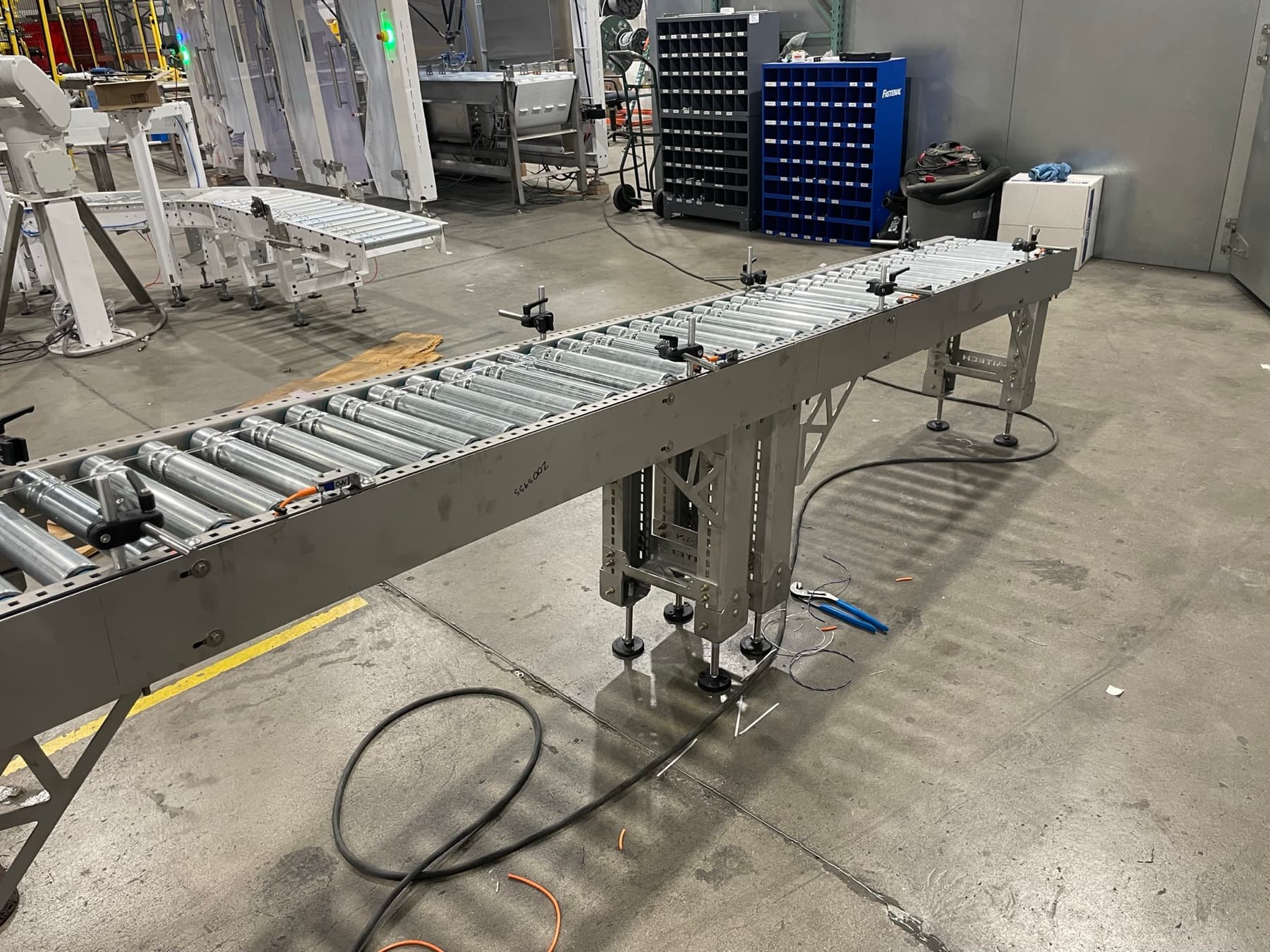
A 24V MDR conveyor (motorized roller conveyor) drives each zone with its own low-voltage roller and local drive card, so cases, trays, and pallets accumulate without touching and only occupied zones draw power.
AQS builds MDR on continuous TIG-welded stainless frames with washdown-rated PulseRoller options, IP67 drive cards, and sealed quick-disconnects, designed to 3-A Sanitary Standards and engineered to IP69K where the room demands it. Zone logic — singulate, slug release, sleep when empty — lives in the drive cards, so the conveyor manages its own traffic and the line PLC only has to say go and stop.
Because there is no line shaft and no chain, a stainless MDR conveyor has no drive train to lubricate and nothing turning in a zone that is empty. That is what makes it the case-handling conveyor of choice for washdown rooms, and it scales: the same architecture moves loaded pallets on heavier hub-motor rollers.
Where a 24V MDR conveyor earns its place
Accumulate cases behind a labeler or palletizer without back-pressure, so a downstream stop never crushes the case at the front of the queue.
Singulate and meter cases to a robotic palletizing cell, one zone per case, with the release timed by the cell.
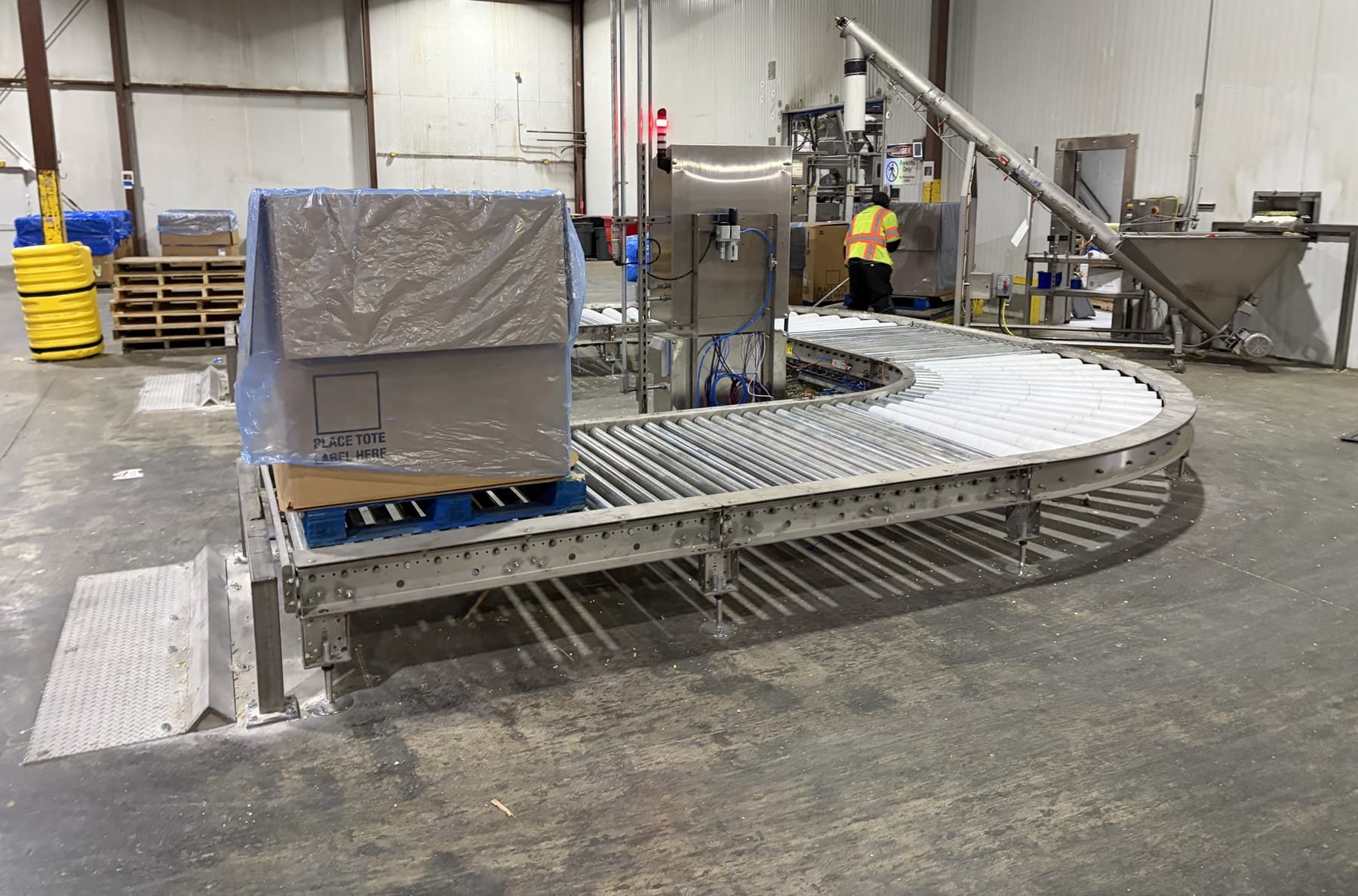
Staging, fill, and discharge zones on a pallet circuit, each zone indexing forward on its own drive card.
Bridge a dry warehouse and a washdown room with a conveyor that is rated for the wet side and quiet on the dry side.
How AQS builds it
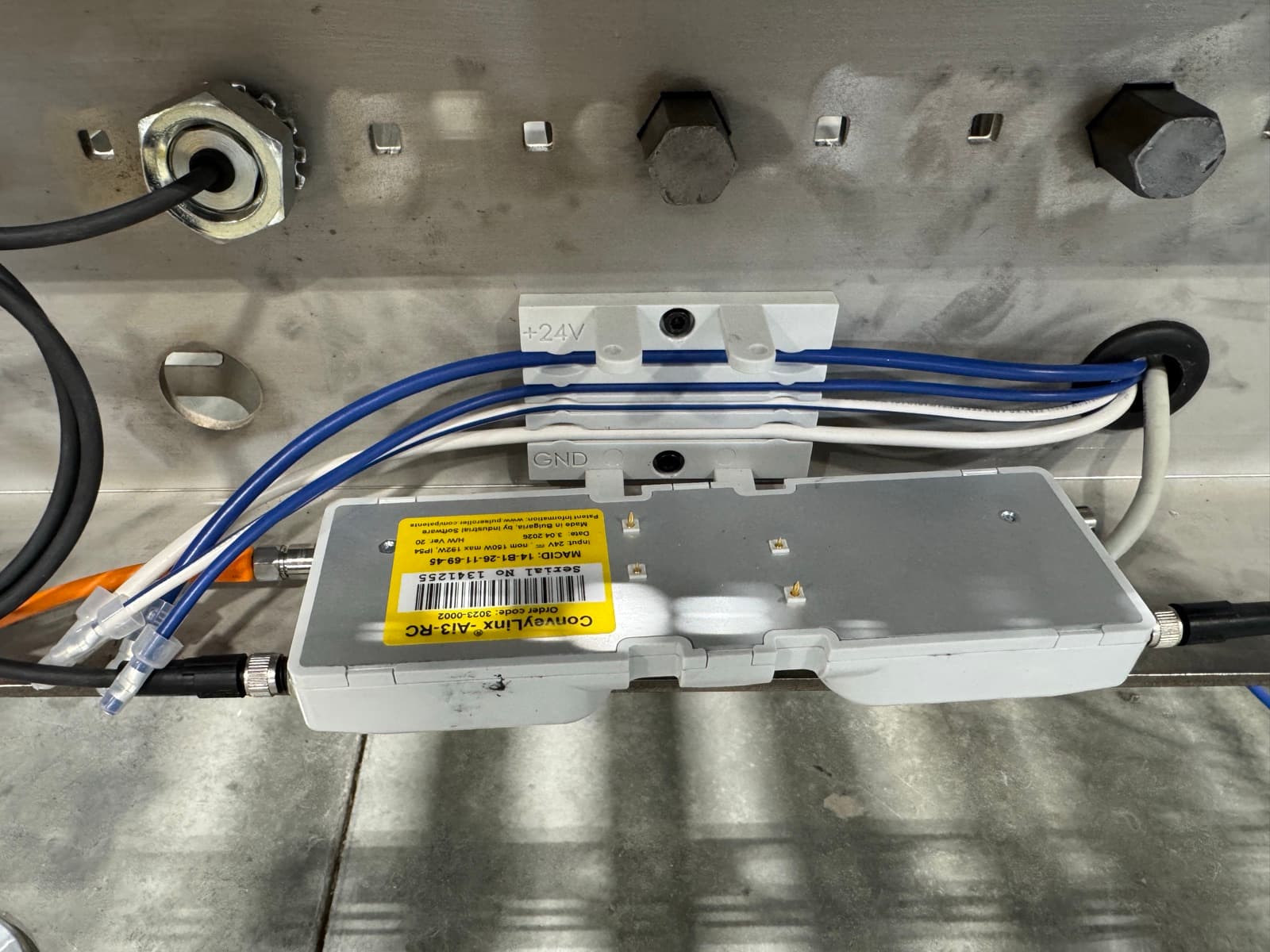
Each zone has a 24 VDC motorized roller and a local drive card; zones communicate with their neighbours for zero-pressure accumulation and slug release.
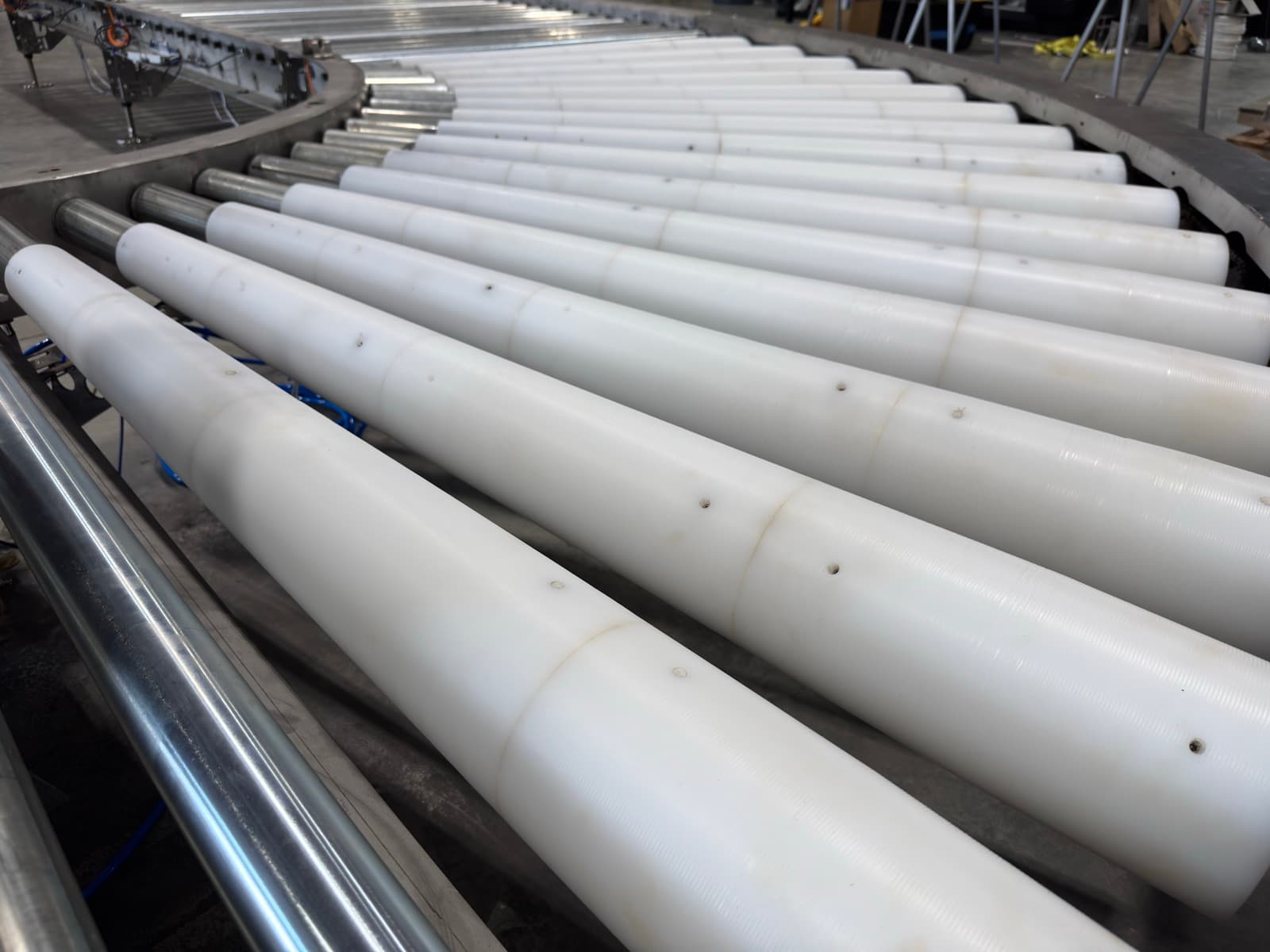
Sealed washdown-rated motorized rollers from PulseRoller, with zinc-coated or stainless carrier rollers to hold off surface rust.
Drive cards and M12 or Meltric connections are sealed for washdown, mounted where they can be reached without tools for replacement.
Continuous TIG welds on 304 stainless with sloped members; IP69K-capable frames and NEMA 4X enclosures where the room is hosed at high pressure.
Accumulation and release logic run in the cards; the Allen-Bradley PLC handles line control and can report zone status to VeriPak SCADA.
Heavier hub-motor rollers and dual-drive zones carry loaded pallets — AQS has built 24V pallet loops moving 1,800 lb loads.
Typical ranges
Every AQS conveyor is engineered to order around the product, the rate, and the room. The ranges below are typical, not limits — tell us what the line needs and we size to it.
| Drive | 24 VDC motorized roller per zone; PulseRoller washdown options |
|---|---|
| Zone control | Local drive card per zone; zero-pressure singulation or slug release; sleep when empty |
| Frame | 304 stainless, continuous TIG-welded, sloped for drainage |
| Temperature | Ambient; freezer-rated rollers, cards, and sensors available |
| Protection | IP65 washdown standard; IP67 drive cards; IP69K-capable frames |
| Controls | Allen-Bradley CompactLogix ready; VeriPak SCADA reporting on request |
| Rating | Protects against |
|---|---|
| IP54 | Dust-protected, splash-resistant |
| IP65 | Dust-tight, low-pressure water jets |
| IP66 | Dust-tight, high-pressure water jets |
| IP67 | Dust-tight, temporary immersion |
| IP69K | Dust-tight, high-pressure/high-temp |
Size It Yourself
The free calculators our engineers use to size conveyors — belt pull, speed, throughput, and drive selection. No login; your inputs stay in your browser.
Free MDR motorized drive roller selection chart: torque, belt pull and RPM per OneMotion series at your roller length, and the smallest series that fits.
Free accumulation conveyor calculator: buffer length in feet for seconds of stoppage, or the time a length absorbs, with zero-pressure zone counts.
Free packaging line flow simulator: chain splits, merges, rejects, dwell stations, stacking and batching, and size accumulation buffers in feet or seconds.
Free conveyor throughput calculator: lb/hr, lb/day or kg/hr to packages per minute, belt speed, and belt load in lb/ft, plus bulk bed sizing.
Common Questions
Tell us about your line
Send us the product, the rate, the room it runs in, and how it gets washed down. An AQS engineer comes back with a layout sketch and a budgetary range — no catalog, no sales script.
Tell Us About Your Line →